Article: Fall & Winter 2026 Cosmetic Packaging Trends: What Beauty Brands Are Prioritizing
Fall & Winter 2026 Cosmetic Packaging Trends: What Beauty Brands Are Prioritizing
Beauty packaging trends are easy to spot. The harder question is which ones are actually worth acting on.
As beauty brands move through holiday launches and start planning for 2027, packaging must do more than look good on a shelf. It needs to work with increasingly specialized formulas, make sense for a more selective shopper, stand out online, and support more specific sustainability goals.
The beauty industry continues to evolve alongside the way consumers discover, compare, and purchase products. For brands choosing packaging this fall and winter, the below priorities stand out.
|
Packaging Priorities to Consider |
What It Means for Packaging |
|
More specific sustainability |
PCR content, mono-material designs, and practical refill options |
|
Better product application |
Airless pumps, fine mist sprayers, and format-specific dispensing |
|
Smaller, portable sizes |
Minis, samples, giftable sizes, and easy-to-carry formats |
|
Stronger visual identity |
Recognizable colors, finishes, shapes, and details |
|
Digital shelf appeal |
Packaging that is recognizable in product photos and social videos |
|
More flexible sourcing |
Packaging brands can test before committing to larger quantities |
Sustainability Is Getting More Specific
“Sustainable” is no longer specific enough on its own.
Beauty brands are paying closer attention to what a package is actually made from, how much recycled material it contains, whether different components can be recycled together, and how realistic a refill system will be for the customer.
This shift is notable in packaging regulations and growing pressure across industries to reduce waste, improve recyclability, and use recycled materials more intentionally.
For beauty brands, the practical takeaway is simple: look for packaging with sustainability attributes you can actually explain.
Instead of stopping at “eco-friendly,” ask:
-
Does the package contain post-consumer recycled material?
-
Is it mono-material or made from several materials?
-
Can the components be separated if needed?
-
Does a refillable format make sense for how customers will actually use the product?
-
Can you clearly communicate what makes the package a more sustainable choice?
CPN’s Impact Collection includes PCR PP jars and PCR PP airless bottles with mono-material pumps.
For a deeper look at PCR, recyclability, materials, and refillable formats, explore CPN’s 2026 Guide to Sustainable Cosmetic Packaging.
Choose Packaging Around the Formula
Skincare, makeup and wellness can overlap in a single product, so the package needs to suit the formula and how it will be used.
With no minimum order quantity on CPN’s in-stock packaging, brands can test a smaller format, seasonal kit or new packaging direction before placing a larger order.
A foundation can behave more like a serum. A lip product may include skincare-focused ingredients. Scalp treatments are becoming more targeted. Sunscreen is appearing in mists, sticks, and complexion products.
As formulas become more specialized, packaging has to keep up.
That means brands are looking beyond the bottle itself and paying more attention to how a customer pumps, sprays, applies and carries the product.
That does not mean every beauty product suddenly belongs in an airless bottle.
It means the package should be chosen around the formula and the way the customer will actually use it.
A lightweight serum or foundation may benefit from an airless pump bottle that provides controlled dispensing while helping limit unnecessary air exposure. A setting spray or facial mist needs a fine mist sprayer that creates an even application. Lip oils and glosses need an applicator that works with the formula’s viscosity and feels natural in the hand.
The trend here is not one particular bottle, but better alignment between formula, package, and application.
Minis Can Do More Than Travel
Small formats can support holiday kits and trial programs as brands plan for 2027.
For customers, minis make products easier to try, gift, travel with, or carry every day. For beauty brands, they can create a lower-commitment way to introduce a formula without changing the core product.
During fall and winter, smaller formats can also fit naturally into:
- Holiday gift sets
- Stocking stuffers
- Travel kits
- Product bundles
- Subscription boxes
- Samples and trial programs
- Limited-edition launches
- Smaller versions of bestselling products
A mini can also give a customer an easier entry point into a premium product before they commit to the full size.
But shrinking the bottle is not enough.
A smaller package still needs to dispense the formula correctly, look intentional beside the full-size product, and give the customer a good first impression of the brand.
CPN carries cosmetic packaging across a range of capacities, including compact airless bottles, jars, lip gloss tubes, and other formats that can help brands test smaller sizes alongside their core products.
With no minimum order quantity on CPN’s in-stock packaging, brands can test a smaller format, seasonal kit, or new packaging direction before placing a larger order.
Build a Recognizable Packaging Design
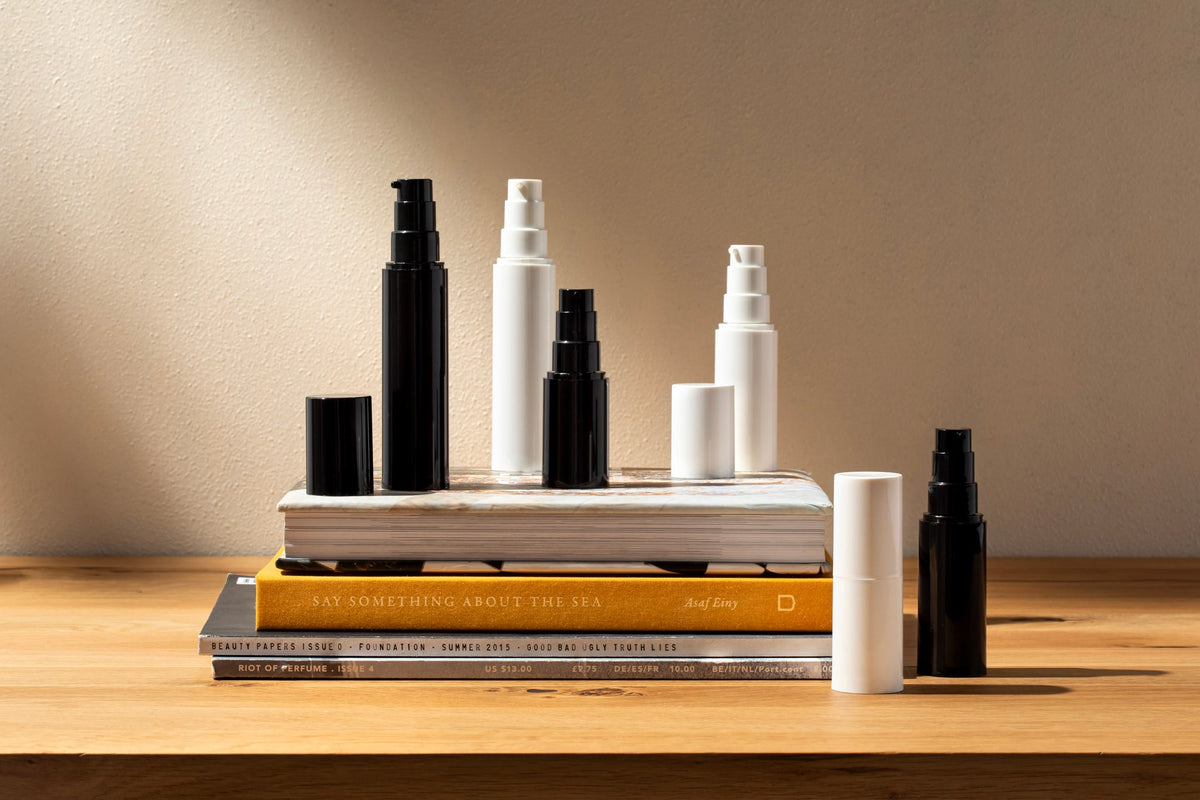
Colors, shapes, finishes, and closure details can help customers recognize products as part of the same line, even when each formula calls for a different container. Brand recognition is a powerful thing, and can be especially useful for holiday sets, limited-edition launches and product collections that need to feel cohesive both online and in person.
You do not necessarily need a completely custom mold to make a package feel distinctive.
A recognizable packaging system can come from repeating a few intentional details across the line:
- Frosted versus clear bottles
- Black, white, or metallic closures
- Consistent cap finishes
- Similar bottle proportions
- A recurring accent color
- A mix of formats that still share the same visual language
- Your foundation, serum, and lip product may all require different containers. They can still look like they belong to the same brand.
Our Luxe, Pure, Vibe, Impact, and other packaging collections make it easier to compare finishes and formats while building a more cohesive packaging direction.
Packaging Has to Work on the Digital Shelf, Too
Your customer may see your product packaging in a TikTok video, an Instagram post, or a small product image on a website before they ever hold it.
That changes what “shelf appeal” means.
Online shopping is becoming an even bigger part of the beauty buying journey. According to NIQ’s 2026 State of Beauty report, 53% of consumers are now purchasing through social platforms, including 22% who have purchased directly through TikTok Shop.
For beauty brands, that means packaging is part of your digital identity just as much as your physical presentation. During the holiday shopping season in particular, customers may be comparing several products quickly across social content, search results, gift guides, and ecommerce sites – often making their first impression from an image or video rather than from seeing the product in person.
Before approving a package, look at it beyond the sample sitting on your desk.
Photograph it.
Film someone using it.
Put several products beside one another.
Shrink the image down to the size it will appear on a product grid.
Then ask:
- Can you still recognize the brand?
- Can customers immediately tell one product from another?
- Does the finish photograph the way you expected?
- Does the packaging still feel distinctive when it is surrounded by competing products?
- Does it look cohesive enough to work in a holiday set or bundle?
The package has to work in the customer’s hand, but increasingly, it also has to earn attention before the customer ever picks it up.
Incorporate Flexibility Into Packaging Decisions
Trends move quickly. Packaging decisions do not always move at the same speed.
Heading into 2027, brands have good reason to be thoughtful about how much inventory they commit to before testing a new product, format, or design direction.
That makes flexibility valuable.
Order a few options. Fill them with the real formula. Pump them. Spray them. Put them in a makeup bag. Ship them. Photograph them. Compare them beside the rest of the line.
If you are planning a holiday kit or limited launch, see how the different packages look together.
Then decide what deserves a larger order.
CPN’s in-stock, no-MOQ model gives brands more room to test. Packaging is available across airless bottles, jars, lip gloss tubes, fine mist sprayers, and other cosmetic formats without requiring a large initial quantity simply to explore a new direction.
That can be especially useful when brands are testing a new SKU now while simultaneously making packaging decisions for their 2027 lineup.
Which Fall/Winter 2026 Cosmetic Packaging Trends Are Worth Following?
Not every beauty industry trend belongs in every product line. The right packaging still comes back to a few basic questions.
Does it work with the formula?
A trend is not useful if the pump, applicator, or container does not perform properly with the product inside.
Does it make sense for your customer?
A refill, mini, or unusual format should make the product easier or more enjoyable to use – not add unnecessary friction.
Does it fit your brand?
Packaging should feel current without looking like you changed your identity simply to follow a trend.
Does it have a job beyond looking trendy?
A mini might create an easier trial opportunity. An airless bottle might improve dispensing. A distinctive finish might make products easier to recognize across a full collection.
The best trends usually solve a real problem.
Can you test it before you scale it?
Whenever possible, work with the actual formula and packaging together before committing to a larger quantity.
Fall/Winter 2026’s strongest cosmetic packaging trends have one thing in common: they make the packaging work harder.
Better materials, better dispensing, greater portability, stronger visual identity, and more flexible sourcing are all valuable when they improve the actual product experience – not simply because they happen to be trending.
As you plan holiday launches and look ahead to 2027, focus less on chasing every new beauty industry trend and more on choosing packaging that makes sense for your formula, your customer and your brand.
When you’re ready to compare options, browse Cosmetic Packaging Now’s cosmetic packaging collections to explore airless bottles, jars, lip gloss containers, sprayers, and more, with no minimum order quantity on in-stock packaging.